

Tua Tagovailoa, Miami Dolphins QB ClutchPoints
With the NFL Draft recently helping us through our Sports-less 2020 lives, we decided to talk about one of the more documented football injuries from the past year. The high energy hip injury affecting the number 5 overall draft pick of the Miami Dolphins, Tua Tagovailoa is an interesting sports injury to discuss. This injury is actually much more commonly seen in the Trauma Orthopaedic world of motor vehicle accidents than in the Sports Orthopaedic world.
Tua had an exceptional career at Alabama and was on his way to being an unquestioned top NFL draft pick before suffering a serious hip injury on November 16th in Alabama’s game vs. Mississippi State last year. Luckily, through some excellent game-day medical care, expert surgical care and Tua’s hard work and determination, Tua still earned his way to being a top 5 NFL draft pick this April.
The Injury:
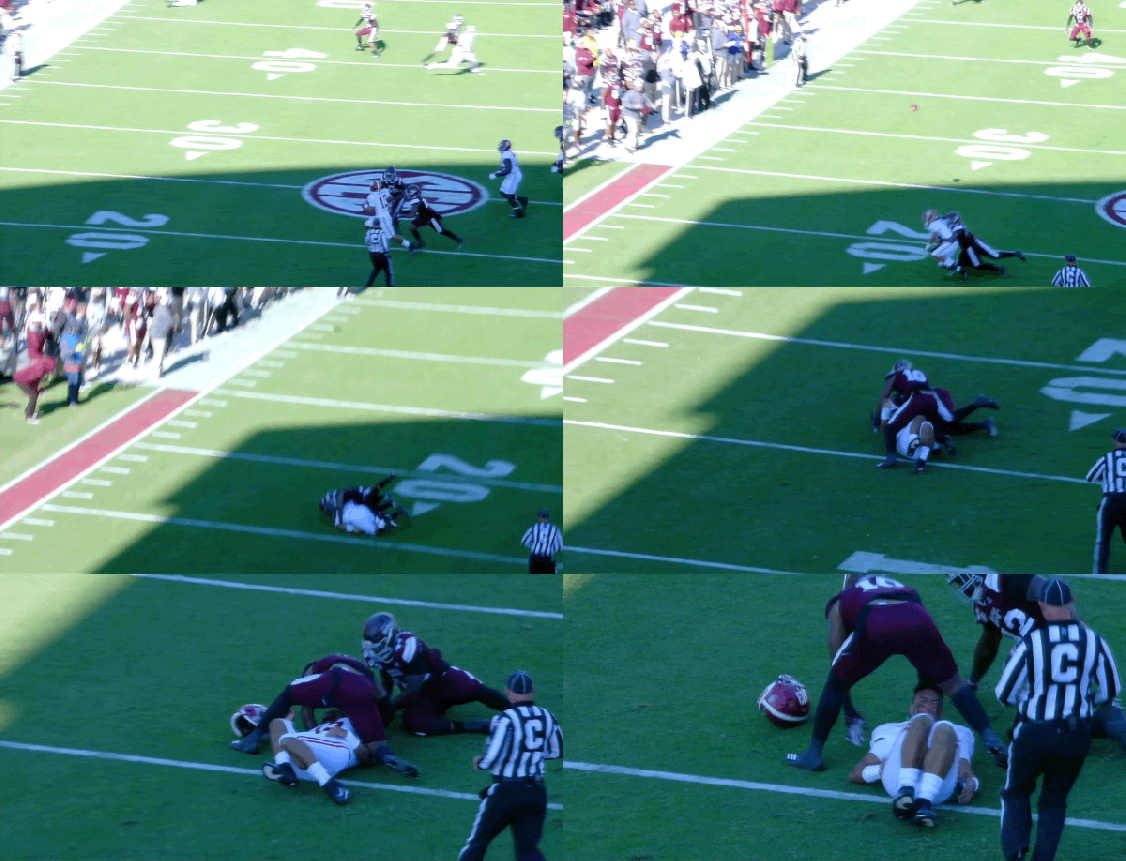
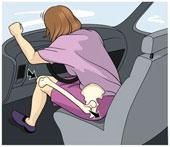
It was 3rd and 4 and Tua was in the shot-gun formation. A weak-side blitz flushes Tua out of the pocket to extend the play, but he is tracked down by two defenders simultaneously. When he is tackled, he takes on the full weight of both defenders and lands primarily on his right knee while his hip and knee are both flexed – or bent – close to a 90-degree angle. This position with knee and hip both flexed to 90 degrees is similar to the position your leg is in when you are sitting in a chair – or in the front seat of a car. The injury Tua suffered – a posterior hip dislocation with a posterior wall acetabulum fracture – is a common injury in motor vehicle accidents and, as I mentioned earlier, often dealt with in the Orthopaedic Trauma world. However, with two SEC defenders plus his own body weight landing directly on his knee in the same position, the energy sent through Tua’s hip was quite similar to that of a motor vehicle accident.
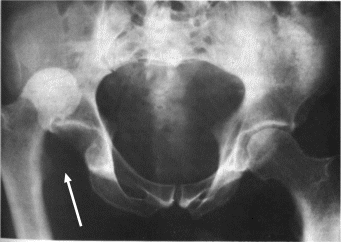
The injury itself – a posterior hip dislocation with a posterior wall fracture – means that the “ball” (femoral head) part of the “ball-in-socket” hip joint came out of the back (or posterior) part of the “cup” (or acetabulum.) On its way out, the “ball” (femoral head) knocked off a part of the back, or posterior, surface of the “cup” (posterior wall fracture.) This surface needs to be repaired surgically to re-create the full circumferential “cup” (acetabulum) and ensure future stability of the “ball-in-socket joint.”
Tua was lucky to be treated by one of the world experts in acetabulum fractures, renowned Orthopaedic Trauma surgeon, Dr. Chip Routt in Houston, TX. Dr. Routt has been quoted as saying the surgery went very well and that the fracture was relatively small and came together nicely during surgery – which is very good for the future health of Tua’s hip.
The other very worrisome complication, from an injury like this, is the risk of femoral head osteonecrosis. This happens when the blood supply to the “ball” (or femoral head) is damaged during the traumatic dislocation event and that causes the “ball” (femoral head) to eventually die without adequate blood supply. The major risk factor for developing this condition is the time from hip dislocation to reduction – or when the hip is “popped back in” and the ball is returned into the socket. Reports indicate that Tua’s hip was reduced before he even left the stadium – which is great prognostic news as it means he is less likely to develop osteonecrosis as a result of this injury. It also means that Tua is one tough dude. A hip reduction is routinely done after the patient is sedated with medication in a hospital setting. It’s unlikely that they had the capabilities to sedate him in the locker room, so he likely underwent this reduction procedure AWAKE.
Given that his hip dislocation was reduced (“popped back in the socket”) quickly and the posterior wall fracture (“broken part of the cup”) was small, fixed well surgically and healing nicely, Tua will do well and likely suffer no limitations during his playing career going forward as a result of this injury.
As with all successful injury recoveries, it takes a team approach – the skilled, decisive work by the University of Alabama’s game day medical team, Dr. Routt’s excellent surgical care and Tua’s relentless work ethic throughout the rehab process have given Tua an opportunity to continue entertaining us all this fall, now wearing a Miami Dolphins Jersey.
 Dr. John M. Kunkel
Leave a comment